The United States construction sector is undergoing a structural shift. Driven by federal investments and changing technological standards, project owners must look beyond brand recognition when selecting a builder. This guide dissects the top construction companies in the USA using verified industry data.
We examine how these firms leverage the Infrastructure Investment and Jobs Act, integrate advanced project lifecycle technologies, and implement sustainable building protocols. Selecting the right partner determines the operational and financial success of commercial and industrial developments.
Table of Contents
- The State of the US Construction Industry in 2026
- How We Selected These Companies
- Key Takeaways from the 2026 Rankings
- Top 10 Biggest Construction Companies in the USA
- US Construction Giants: Comprehensive Comparison
- Industry Specialization Guide: Who is Best For What?
- Why These Companies Continue to Lead the Industry
- Future of the US Construction Industry
- How to Choose the Right Construction Company
- Frequently Asked Questions (FAQs)
The State of the US Construction Industry in 2026
Overall US construction spending exceeds $2.1 trillion annually. Commercial construction remains steady, while dedicated infrastructure spending continues to reach new benchmarks. Data center investment is accelerating alongside significant renewable energy funding.
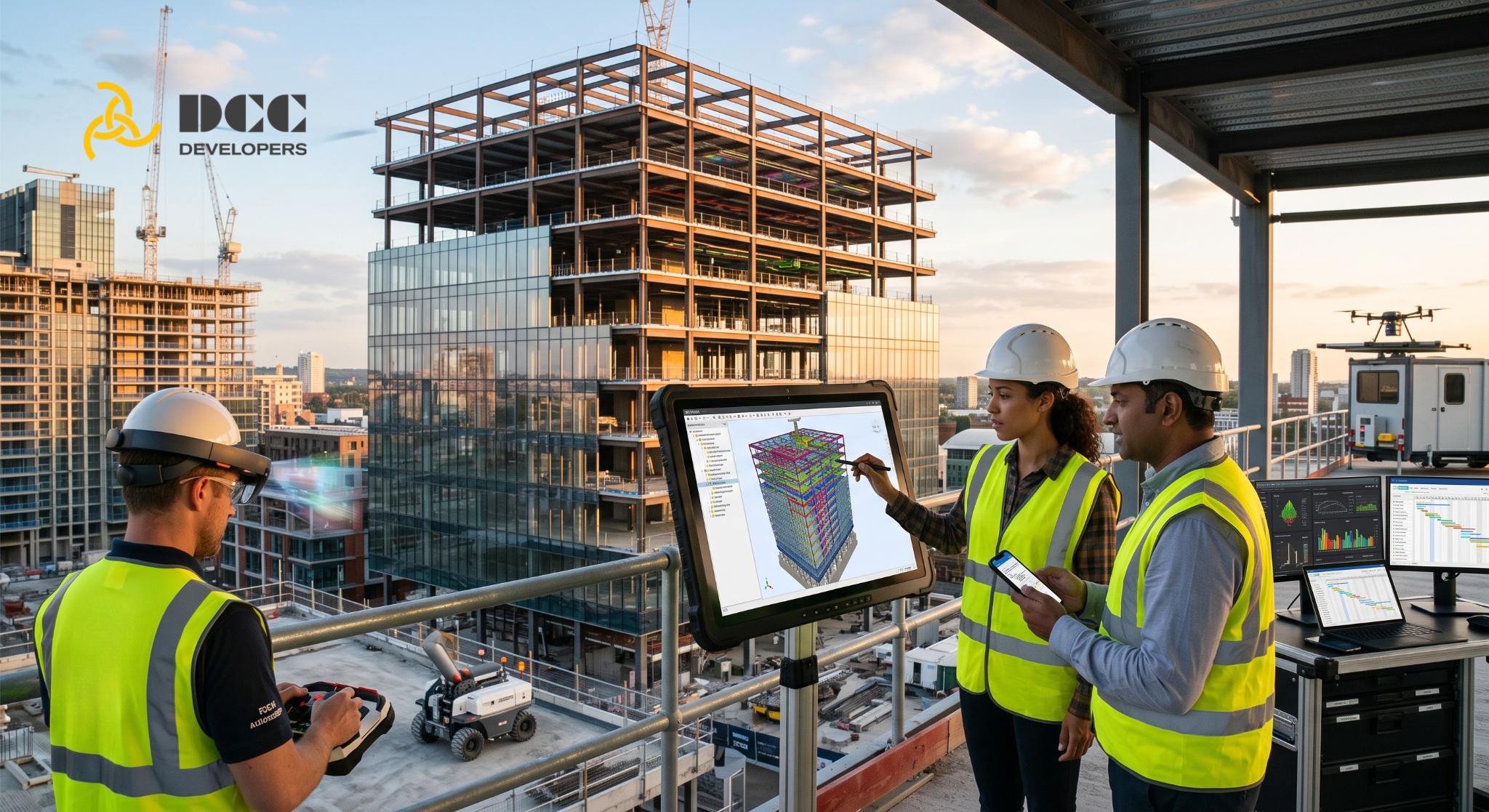
However, the market presents distinct challenges. Contractors manage persistent labor shortages while navigating volatile material costs. Leading construction companies counteract these friction points using Building Information Modeling (BIM) and AI automation. These digital tools coordinate engineering tasks and keep commercial buildings on schedule.

Definition: Building Information Modeling (BIM)
Building Information Modeling (BIM) is a digital process that creates a shared 3D model of a facility, improving spatial coordination, scheduling, and cost control across the project lifecycle.
How We Selected These Companies
These rankings rely on analytical criteria to ensure transparency. Our methodology evaluates annual construction revenue, total workforce size, and geographic reach. We also reviewed market reputation, sustainability initiatives, and recent technological integration.
To maintain reporting consistency, we standardized all financial metrics utilizing the most recent ENR Top 400 Contractors reporting period (reflecting verified construction revenue) and official corporate financial disclosures.
| Verified Data Sources Used For This Analysis |
| Engineering News-Record (ENR) Top 400 Contractors Data |
| Statista US Construction Market Industry Reports |
| Fortune 500 Corporate Financial Disclosures |
| IBISWorld Heavy Civil Engineering and Construction Trends |
| Official Corporate Annual Reports and Investor Presentations |
Key Takeaways from the 2026 Rankings
Analyzing current industry data reveals several structural trends shaping the US construction sector:
- Commercial Volume: Turner Construction maintains the highest domestic commercial volume, driven by large-scale sports venues, healthcare facilities, and corporate campuses.
- Energy Transition: Bechtel and Fluor lead major industrial and energy projects, benefiting from federal incentives for nuclear, LNG export, and clean energy facilities.
- Data Center Growth: Rapid expansion in artificial intelligence infrastructure has created sustained growth for technical builders like DPR Construction and STO Building Group.
- Heavy Civil Stability: Federal funding from the Infrastructure Investment and Jobs Act provides stable, multi-year project pipelines for contractors such as Kiewit Corporation and Clark Construction Group.
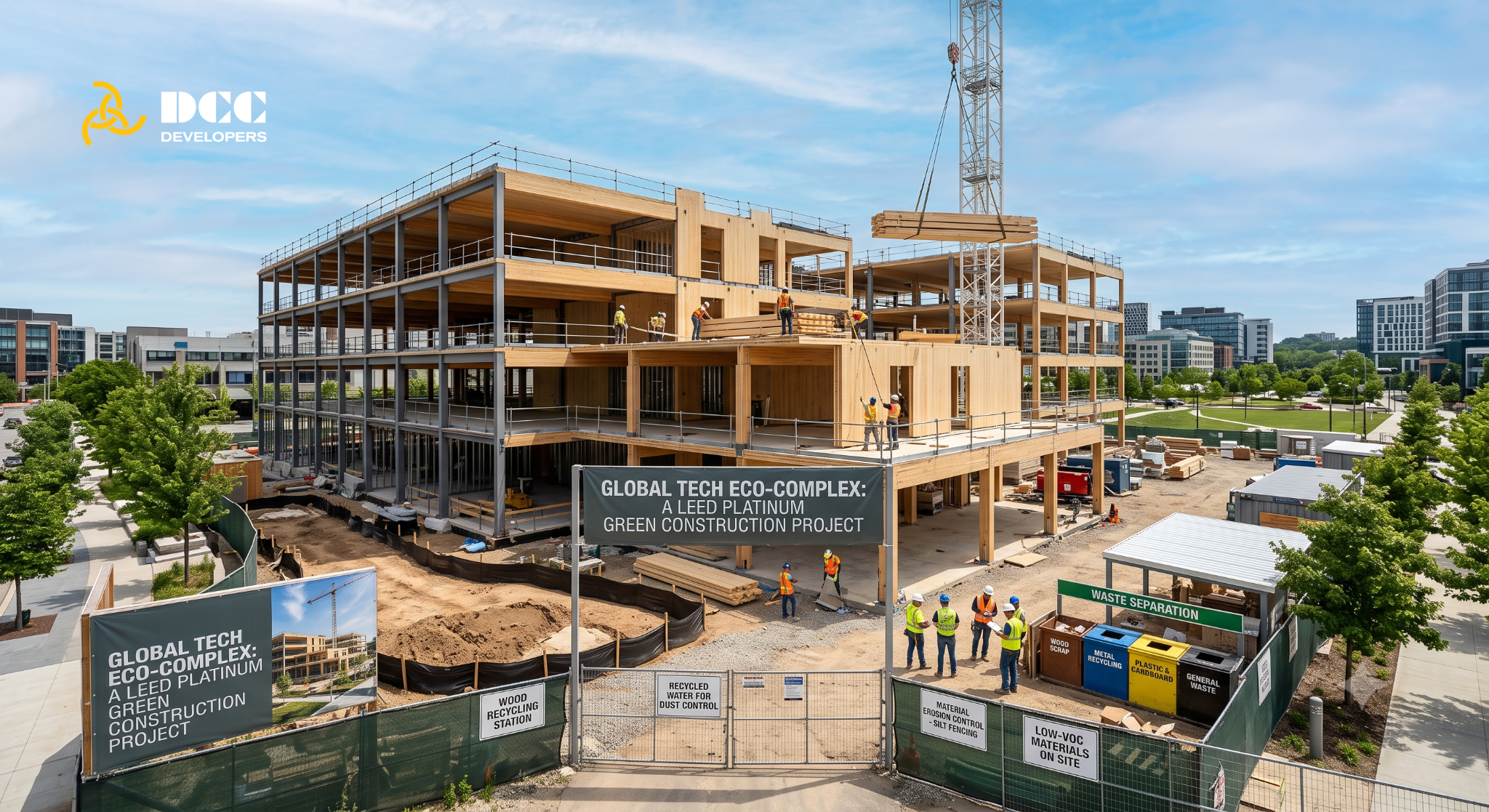
- Sustainability Mandates: Carbon reduction metrics, LEED certification, and low-carbon building materials have transitioned from optional features to standard contract requirements.
Top 10 Biggest Construction Companies in the USA
1. Turner Construction Company
- Company Overview: Turner Construction is the largest commercial builder in the United States based on ENR Top 400 revenue data. Headquartered in New York City since 1902, the firm operates as a subsidiary of the German construction group Hochtief.
- Headquarters: New York, New York
- Founded: 1902
- Revenue: $20.2 Billion
- Employees: 14,000
- Industries Served: Commercial, Healthcare, Education, Sports, Mission Critical
- Major Projects: Tennessee Titans Stadium, Buffalo Bills Stadium
- Technologies & Sustainability: Turner pioneered steel-reinforced concrete construction and currently leads in LEED-certified commercial projects. The firm utilizes virtual design and 4D BIM for clash detection, prefabrication tracking, and site safety management.
2. AECOM
- Company Overview: AECOM integrates architectural design, engineering, and heavy construction management. Operating from Dallas, Texas, the firm handles large-scale public infrastructure and urban development projects worldwide.
- Headquarters: Dallas, Texas
- Founded: 1990
- Revenue: $15.98 Billion
- Employees: 50,000
- Industries Served: Transportation, Water, Environment, Government, Transit
- Major Projects: Gateway Program (Hudson River Tunnel), urban mass transit systems
- Technologies & Sustainability: AECOM deploys AI-driven structural modeling and conducts climate resilience assessments for municipal infrastructure. They frequently manage complex environmental remediation programs and urban transit networks across North America, Europe, and Asia.
3. Bechtel Corporation
- Company Overview: Bechtel Corporation is a global engineering, procurement, and construction (EPC) firm. Privately held since its founding in 1898, Bechtel manages complex civil, defense, and energy projects across 160 countries.
- Headquarters: Reston, Virginia
- Founded: 1898
- Revenue: $15.9 Billion
- Employees: 50,000
- Industries Served: Nuclear, Energy, Infrastructure, Defense, Mining
- Major Projects: Plant Vogtle Nuclear Units 3 & 4, NASA Launch Site, Riyadh Metro
Definition: EPC Contractor
An EPC (Engineering, Procurement, and Construction) contractor manages the entire project design, material procurement, and construction delivery under a single contract.
- Technologies & Sustainability: Bechtel executes large-scale energy transition projects, including utility-scale solar installations and nuclear deployments. The company uses proprietary software to track international supply chains and enforce job-site safety standards.
4. Fluor Corporation
- Company Overview: Fluor Corporation is a publicly traded EPC contractor specializing in industrial facilities, chemical processing plants, and energy infrastructure.
- Headquarters: Irving, Texas
- Founded: 1912
- Revenue: $15.5 billion
- Employees: 27,000
- Industries Served: Energy, Mining, Industrial, Advanced Manufacturing
- Major Projects: LNG Canada Export Facility, advanced manufacturing plants
- Technologies & Sustainability: Fluor utilizes cloud-based project management platforms to monitor cross-border logistics and cost estimation. Through acquisitions of specialized engineering firms, Fluor continues to expand its digital construction and carbon management services.
5. Kiewit Corporation
- Company Overview: Kiewit Corporation is an employee-owned civil engineering and heavy construction contractor. It is one of North America’s largest transportation, bridge, and water infrastructure builders.
- Headquarters: Omaha, Nebraska
- Founded: 1884
- Revenue: $14.0 Billion
- Employees: 31,800
- Industries Served: Transportation, Water, Power, Oil & Gas, Mining
- Major Projects: I-70 Mountain Corridor Expansion, regional water treatment plants
- Technologies & Sustainability: Kiewit incorporates autonomous earthmoving equipment and digital twin models to accelerate site preparation. Their employee-ownership structure supports high workforce retention and standardized quality assurance protocols.
6. The Whiting-Turner Contracting Company
- Company Overview: Whiting-Turner provides general contracting, construction management, and design-build services. The firm is known for maintaining zero debt, providing financial stability across multi-year institutional projects.
- Headquarters: Baltimore, Maryland
- Founded: 1909
- Revenue: $13.3 Billion
- Employees: 4,600+
- Industries Served: Higher Education, Healthcare, Mission Critical, Corporate
- Major Projects: University research centers, regional medical facilities
- Technologies & Sustainability: Whiting-Turner applies analytics and cloud-based scheduling platforms to oversee complex university and healthcare builds, ensuring compliance with strict safety standards.
7. STO Building Group
- Company Overview: STO Building Group consists of eight family-led construction management firms specializing in interior fit-outs, building renovations, and commercial structures.
- Headquarters: New York, New York
- Founded: 1971 (as Structure Tone)
- Revenue: $12.0 Billion
- Employees: 5,100
- Industries Served: Corporate Interiors, Healthcare, Technology, Retail
- Major Projects: Fortune 500 corporate headquarters, media production facilities
- Technologies & Sustainability: STO focuses on sustainable interior construction, sourcing low-embodied-carbon materials and energy-efficient lighting systems to support corporate ESG commitments.
8. DPR Construction
- Company Overview: DPR Construction is a technical general contractor specializing in complex, highly regulated environments, including life sciences labs and hyperscale data centers.
- Headquarters: Redwood City, California
- Founded: 1990
- Revenue: $10.8 Billion
- Employees: 9,800
- Industries Served: Data Centers, Life Sciences, Healthcare, Advanced Tech
- Major Projects: Hyperscale data center campuses, biopharmaceutical facilities
- Technologies & Sustainability: DPR relies heavily on Integrated Project Delivery (IPD), off-site prefabrication, and modular construction. Their methods reduce job-site waste and shorten construction schedules for tech clients.
9. Skanska USA
- Company Overview: Skanska USA is the American construction division of Swedish developer Skanska AB. The division handles commercial developments, civil transit systems, and social infrastructure.
- Headquarters: New York, New York (US Headquarters)
- Founded: 1971 (US Entry)
- Revenue: $7.5 Billion
- Employees: 7,000
- Industries Served: Aviation, Transit, Higher Education, Commercial Development
- Major Projects: LaGuardia Airport Terminal B, Moynihan Train Hall
- Technologies & Sustainability: Skanska tracks embodied carbon on project sites and mandates low-carbon concrete on viable builds, working toward net-zero carbon targets across its civil and commercial portfolios.
10. Clark Construction Group
- Company Overview: Clark Construction Group is a general contractor with extensive experience in major public infrastructure, civil engineering, and cultural landmarks.
- Headquarters: Bethesda, Maryland
- Founded: 1906
- Revenue: $6.0+ Billion
- Employees: 4,200
- Industries Served: Government, Aviation, Cultural Venues, Sports Facilities
- Major Projects: Chase Center (San Francisco), National Museum of African American History and Culture
- Technologies & Sustainability: Clark deploys IoT sensor networks and drone surveying for real-time site monitoring, safety auditing, and quantity takeoff verification on urban sites.
US Construction Giants: Comprehensive Comparison
This comparison details the operational metrics, employee counts, and recent notable builds of the top 10 general contractors in the US.
| Company | Revenue (ENR Data) | Employees | Headquarters | Founded | Primary Specialization | Major Recent Project |
| Turner Construction | $20.2 Billion | 14,000 | New York, NY | 1902 | Commercial & Sports | Tennessee Titans Stadium |
| AECOM | $15.98 Billion | 50,000 | Dallas, TX | 1990 | Public Infrastructure | Gateway Hudson River Tunnel |
| Bechtel Corporation | $15.9 Billion | 50,000 | Reston, VA | 1898 | Energy & EPC | Plant Vogtle Nuclear Units 3 & 4 |
| Fluor Corporation | $15.5 Billion | 27,000 | Irving, TX | 1912 | Energy & Industrial | LNG Canada Export Facility |
| Kiewit Corporation | $14.0 Billion | 31,800 | Omaha, NE | 1884 | Heavy Civil & Highways | I-70 Corridor Expansion |
| Whiting-Turner | $13.3 Billion | 4,600+ | Baltimore, MD | 1909 | Education & Healthcare | University Research Centers |
| STO Building Group | $12.0 Billion | 5,100 | New York, NY | 1971 | Corporate Interiors | Fortune 500 Corporate Headquarters |
| DPR Construction | $10.8 Billion | 9,800 | Redwood City, CA | 1990 | Data Centers & Life Sciences | Hyperscale Data Center Campuses |
| Skanska USA | $7.5 Billion | 7,000 | New York, NY | 1971 | Aviation & Transit | LaGuardia Airport Terminal B |
| Clark Construction | $6.0+ Billion | 4,200 | Bethesda, MD | 1906 | Government & Cultural | Chase Center (San Francisco) |
Industry Specialization Guide: Who is Best For What?
Selecting the right general contractor requires matching project requirements with a firm’s specific technical focus and market experience.
| Construction Company | Core Industry Specialization (Best For) |
| Turner Construction | Commercial Office Buildings, Sports Stadiums, Healthcare Facilities |
| AECOM | Urban Mass Transit, Environmental Remediation, Civil Engineering |
| Bechtel Corporation | Nuclear Facilities, Defense Projects, Megawatt Power Plants |
| Fluor Corporation | Petrochemical Processing, LNG Export Terminals, Industrial Plants |
| Kiewit Corporation | Highway Infrastructure, Bridges, Heavy Earthmoving, Water Treatment |
| Whiting-Turner | University Campuses, Hospital Expansions, Debt-Sensitive Projects |
| STO Building Group | Corporate Fit-Outs, Building Renovations, Commercial Interiors |
| DPR Construction | Hyperscale Data Centers, Biopharmaceutical Manufacturing Labs |
| Skanska USA | Sustainable Commercial Buildings, Aviation Terminals, Net-Zero Builds |
| Clark Construction | Federal Government Buildings, Cultural Museums, Civic Venues |
Why These Companies Continue to Lead the Industry
The largest contractors in America maintain market leadership through structural advantages:
- Financial Bonding Capacity: Large balance sheets enable these firms to secure bonding for multi-billion-dollar projects and absorb raw material price volatility.
- Safety Performance: Industry leaders consistently maintain Experience Modification Rates (EMR) below national averages, reducing insurance overhead and project liability.
- Technology Investment: These firms fund dedicated internal research teams to pilot BIM, prefabrication, drone surveying, and automated equipment, driving site productivity.
- Talent Retention: Structured apprenticeship programs and employee-ownership models help top firms attract and retain skilled personnel despite national labor shortages.
Future of the US Construction Industry
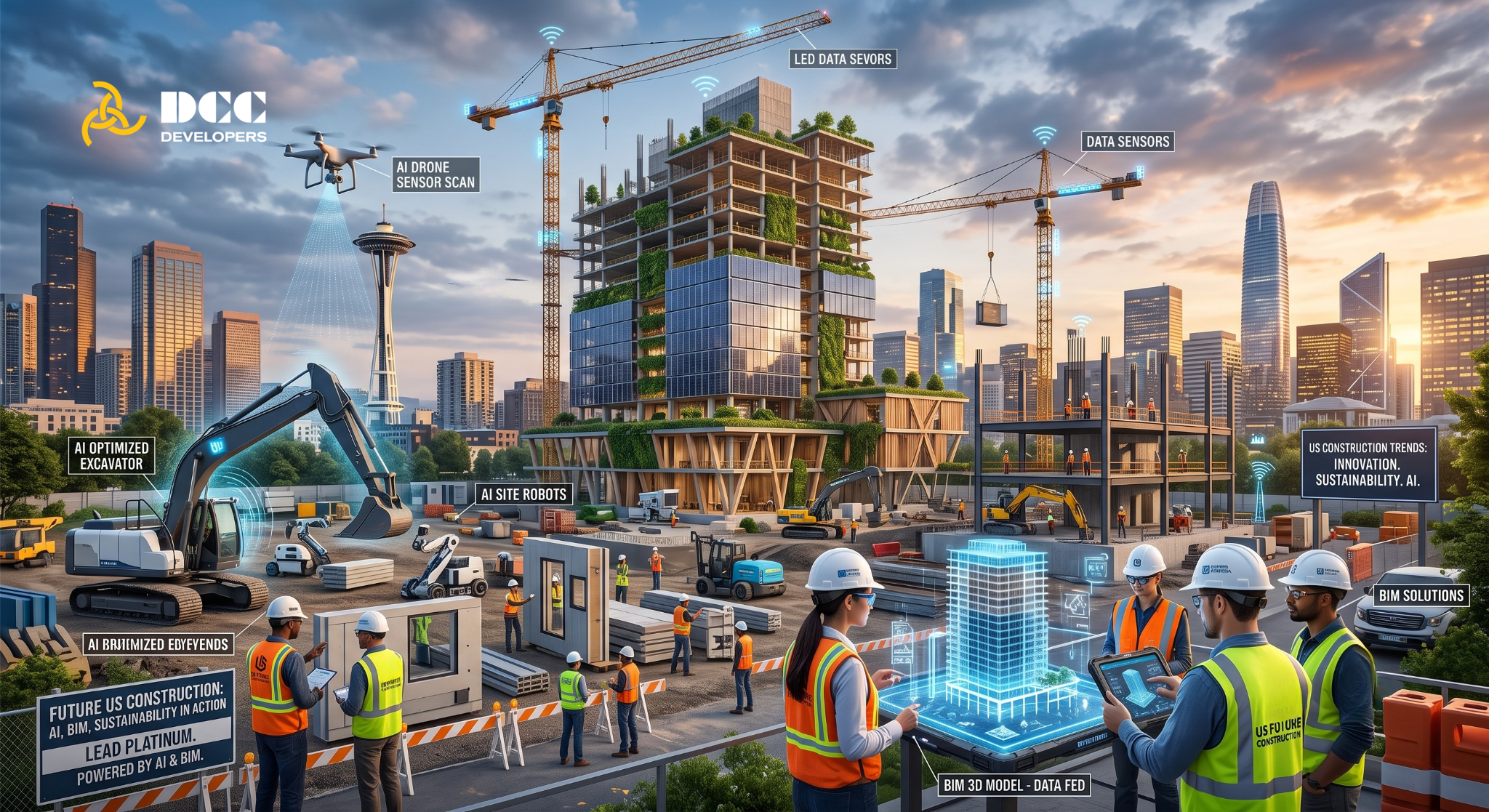
Several emerging project categories are reshaping construction pipelines:
- Semiconductor Plants and Battery Gigafactories: Federal initiatives supporting domestic manufacturing have spurred demand for cleanroom facilities and complex mechanical, electrical, and plumbing (MEP) installations.
- AI Data Centers: Hyperscale data centers require advanced cooling systems and high-capacity electrical connections, driving growth for technical builders like DPR and STO.
- Hydrogen and Clean Energy Infrastructure: Federal energy transition grants are funding hydrogen production facilities and carbon-capture infrastructure, benefiting industrial EPC contractors like Bechtel and Fluor.
- Smart Cities: Municipalities are integrating IoT monitoring, smart traffic grids, and resilient water networks into public works programs.
Read more in our Commercial Construction Guide.
How to Choose the Right Construction Company
Selecting a general contractor for a commercial or civil project requires structured evaluation:
- Portfolio Match: Review the firm’s recently completed projects to ensure they have relevant experience in your specific building type.
- Safety Metrics: Inspect the contractor’s OSHA Incident Rate and EMR safety record over the past three to five years.
- Financial Health: Verify bonding capacity and credit ratings to ensure financial stability through project completion.
- Technology Standards: Confirm the firm utilizes cloud-based project management, 4D BIM, and digital documentation systems to track change orders and progress schedules.
Frequently Asked Questions (FAQs)
Which is the largest construction company in the USA?
Based on recent ENR revenue figures, Turner Construction Company is the largest commercial builder in the United States, reporting over $20 billion in annual construction revenue.
Which company has the highest revenue?
When considering total global corporate revenue (including international engineering, design, and consultancy services), AECOM and Bechtel Corporation report higher total revenues than pure-play domestic builders.
Which company builds data centers?
DPR Construction, STO Building Group, and Whiting-Turner are leading general contractors for hyperscale data centers and mission-critical technology facilities.
Which construction company works with the federal government?
Bechtel Corporation executes large-scale defense and Department of Energy contracts, while Clark Construction Group manages domestic federal buildings and civic infrastructure.
Which company specializes in green buildings?
Skanska USA and Turner Construction lead in LEED-certified construction and low-carbon building methodologies.
Who builds the biggest infrastructure projects?
Kiewit Corporation leads domestic highway and heavy civil construction, while Bechtel Corporation builds nuclear power plants, rail lines, and global energy developments.
Which US construction company works internationally?
Fluor Corporation, Bechtel Corporation, and AECOM maintain extensive international operations across Europe, Asia, and the Middle East.
What are the fastest-growing construction companies?
Firms specializing in data centers, energy infrastructure, and industrial manufacturing—such as DPR Construction and STO Building Group—have seen rapid revenue growth.
Which company builds airports?
Skanska USA and Clark Construction Group have led major aviation developments, including active terminal redevelopments at LaGuardia Airport and Ronald Reagan Washington National Airport.
Which construction company is employee-owned?
Kiewit Corporation is privately held and employee-owned, a structure that supports long-term employee retention and operational consistency.
Final Thoughts
The top 10 construction companies in the USA drive the development of America’s commercial, civic, and energy infrastructure. From Turner’s commercial dominance to Bechtel’s global EPC capabilities, these firms have the resources to execute high-complexity projects.
Project owners evaluating contractors should look beyond revenue figures alone. Matching a firm’s specialization, safety record, and technology adoption to your specific project needs is the most reliable way to achieve successful outcomes.